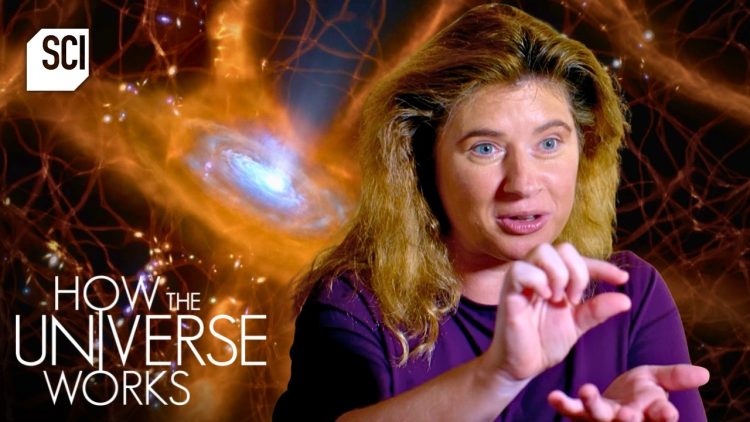
Invisible Forces that Shape Our Reality — How the Universe Works
Most of what shapes our reality cannot be seen. The forces and phenomena beyond the reach of the naked eye — dark matter, neutrinos, distant quasars, black holes and the mysterious structures of the universe — are invisible, and yet they decide what the universe looks like and how it behaves. This episode of How the Universe Works sets out to uncover them, looking under what the series calls the celestial hood to tell the greatest story of all: the story of where we, and everything else, came from.
The film starts with a simple observation: the universe we can see is only part of the universe there is. The stars and galaxies are the visible fraction, and behind them are forces and particles that never show themselves directly. Dark matter holds galaxies together without ever being seen. Neutrinos stream through everything, almost never interacting, in numbers beyond imagining. The documentary follows the scientists who learned to see these things indirectly — not by looking at them, but by looking at what they do.
From the smallest particles, the film moves to the largest structures. Distant quasars — the brightest objects in the universe, powered by black holes at the hearts of young galaxies — shine across billions of light-years, and the documentary uses them as beacons, showing how they illuminate the structure of the cosmos. Black holes themselves, once thought to be little more than a theoretical curiosity, turn out to be everywhere, shaping the galaxies around them and bending the very fabric of space.
What makes the film work is its sense of scale. It moves, in a single hour, from particles smaller than atoms to structures larger than galaxies, and it treats that range as the point: the invisible forces are not a separate subject from the visible universe. They are the same subject. The dark matter that holds a galaxy together, the neutrinos that pass through your body by the trillions, the black hole at the centre of a galaxy — these are not curiosities at the edge of physics. They are the machinery of reality.
By the end, the film has reframed what it means to look at the sky. The night sky, the documentary argues, is a partial view — a bright surface over a deeper structure that we are only beginning to map. The invisible forces are still mysterious, and the film does not pretend otherwise. But the story it tells is one of progress: a cast of experts, eye-popping CGI and a century of patient work, bringing into view the forces that shape our reality, one discovery at a time.
What the Film Explores
The film explores dark matter first, and it is the most mysterious of its subjects. Dark matter cannot be seen, and it has never been directly detected — and yet the documentary shows how its presence is known: galaxies spin too fast for the visible matter in them to hold together, and something unseen must be providing the extra gravity. The film follows the evidence for that unseen something, and the search for what it might be.
A second thread follows the neutrinos, the ghost particles of the universe. Neutrinos pass through almost everything, almost always, in staggering numbers — and the film treats them as a window into the hidden workings of reality. They are produced in the hearts of stars and in the violence of distant explosions, and they carry information across the universe untouched. The documentary shows how scientists learned to catch a few of them, and what those few have told us.
A third thread follows the quasars and the black holes, the most dramatic objects in the film. Quasars are the brightest things in the universe, powered by matter falling into black holes at the centres of galaxies, and the documentary uses them to show how the largest structures in the cosmos are shaped by the smallest, densest objects in it. Black holes, once a curiosity, are now understood as architects — shaping galaxies, bending light, and marking the places where the laws of physics are tested to their limits.
Running through the film is the idea of structure itself — the mysterious structures shaping our universe, from the cosmic web of galaxies to the forces that hold it all together. The documentary’s argument is that the universe has a shape, and that the shape is set by things we cannot see. To understand where we came from, the film suggests, we have to look past the visible — and the tools for doing that, from giant detectors to computer simulations, are the real heroes of the story.
Key Themes & Topics Examined
- Dark matter — the unseen gravity that holds galaxies together
- Neutrinos, the ghost particles streaming through everything
- Distant quasars, the brightest objects in the universe
- Black holes, and how they shape the galaxies around them
- The mysterious structures shaping our universe
- The cosmic web, and the shape of the universe itself
- How scientists see the invisible — indirectly, by what it does
- The greatest story of all: where we, and everything else, came from
Production & Background
The film is an episode of How the Universe Works, the Science Channel series that looks under the celestial hood to tell the story of where we and everything else came from. The series is built around a cast of experts and eye-popping CGI, and this episode follows that pattern: a tour of the invisible, from the smallest particles to the largest structures.
The documentary’s structure follows the scale of its subject — from dark matter and neutrinos to quasars and black holes — and its argument is that the invisible forces are not a footnote to astronomy. They are the machinery of reality, and understanding them is the work of understanding the universe itself.
Recommended Companion Viewing
Explore authoritative investigative documentaries on related historical events and investigative subjects.

T. Rex: The Science Behind the Monster
The Big Bang Special How the Universe Works
Space Station Operations Update
The story of our planet, retold
Frequently Asked Questions
What is the film about?
The invisible forces and phenomena beyond the reach of the naked eye — dark matter, neutrinos, distant quasars, black holes and the mysterious structures shaping our universe.
What is How the Universe Works?
A Science Channel series that looks under the celestial hood to tell the greatest story of all: the story of where we, and everything else, came from. It uses a cast of experts and eye-popping CGI.
What is dark matter?
Matter that cannot be seen and has never been directly detected, but whose gravity is needed to explain how galaxies hold together. The film follows the evidence for it and the search for what it might be.
What are neutrinos?
Ghost particles that pass through almost everything, almost always, in staggering numbers — produced in the hearts of stars and in distant explosions, and carrying information across the universe untouched.
What are quasars?
The brightest objects in the universe, powered by matter falling into black holes at the centres of young galaxies — beacons that illuminate the structure of the cosmos.