
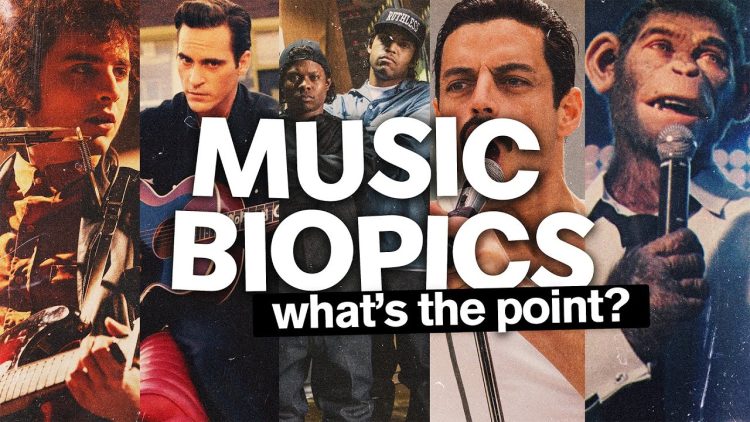
What’s the Point of Music Biopics?
In 2028, director Sam Mendes is set to release an enormous biopic project centred around the Beatles. It is a sign, Polyphonic argues, that we are fast hurdling towards the zenith of the music biopic era. In the wake of successes like Bohemian Rhapsody and Rocketman, we have seen high-budget, estate-sanctioned biopics from musical giants like Aretha Franklin, Elvis, Bob Marley, Bob Dylan and even Weird Al. Later come biopics on Michael Jackson and Bruce Springsteen, and there are apparently films in the works right now about Madonna, Keith Moon and Billy Joel. Martin Scorsese has even been in talks to develop a Frank Sinatra biopic.
There is one very obvious point to all of these biopics, and the film names it first: money. When you create a film based on an artist who is already beloved by millions, who has already sold millions of records, you are tapping into a bankable audience, an audience that has proved it is willing to spend money to support this artist. In an era when movie studios are all about safe bets, and many one-time safe bets are flopping, music biopics are a natural investment that almost always pay back, and often pay out to pretty absurd degrees. Bohemian Rhapsody, the 2018 film about Freddie Mercury and Queen, grossed over $900 million worldwide and won Rami Malek an Academy Award. But surely, Polyphonic argues, that cannot be the only reason why these films exist.
The problem, as the film sees it, is that so many of these biopics feel pointless. Or maybe pointless is too harsh: there are definitely fun aspects to even the most formulaic of them. These movies, especially the big-budget ones, tend to be marvellous exercises in production design, a testament to the incredible work of costume designers, set designers, makeup artists, location scouts and the many people behind the scenes who make movie magic happen.
The film’s sharpest comparison is between the two films that define the modern biopic. Rocketman, the 2019 film about Elton John starring Taron Egerton, is told truly from its main character’s perspective, using a trippy, fantastical production style that bends reality to reflect Elton’s view of his life. Its music is character-driven, functioning as a jukebox musical that repurposes Elton John’s songs to tell his story. Bohemian Rhapsody, by contrast, is straightforward and realist: Queen’s music is used diegetically, in rehearsals and concerts, to enact how songs were written, and the film barely scratches the surface of Mercury, feeling like the filmic equivalent of a Wikipedia article. The difference, Polyphonic argues, is the difference between a film that uses its subject’s art to understand them and a film that simply replays their greatest hits.
What the Film Explores
The film explores the economics of the genre. A music biopic is one of the safest bets in modern Hollywood: a pre-sold audience, a catalogue of songs everyone already loves, and an estate that will promote the film for free.
It also explores the strange corners of the genre.
Finally, the film explores what a music biopic could be. The answer it reaches is not that the genre should die, but that it should be braver: that a biopic earns its existence when it finds a form that matches its subject, as Rocketman does, rather than when it ticks off the Wikipedia page. The film ends not with a verdict but with a hope: that the coming wave, from the Beatles project to the Springsteen film, might find a deeper and more lasting purpose for the music biopic, and a place for it in our cultural landscape beyond the box office.
Key Themes
- The zenith of the biopic: Sam Mendes’s four-film Beatles project, due in 2028, marks the peak of a genre that now covers everyone from Elvis to Weird Al.
- Money, please: biopics are safe bets built on bankable audiences, and Bohemian Rhapsody’s $900 million gross shows why studios love them.
- Production design: even the most formulaic biopics are marvels of costume, set and makeup work, and that craft deserves credit.
- Rocketman vs Bohemian Rhapsody: Elton John’s story, told as a fantastical jukebox musical from his perspective, against Queen’s, told as a straightforward realist replay.
- The Wikipedia problem: too many biopics simply enact the facts, instead of using the artist’s music to understand them.
- What they could be: a biopic earns its existence when its form matches its subject, not when it ticks off the discography.
Production and Background
The film is a Polyphonic video essay, from the channel’s long-running series of music analysis, and it follows the channel’s usual method: a single question, pursued through close viewing of as many examples as the presenter can get his hands on, with the argument built from the films themselves rather than from theory.
Polyphonic’s essays are known for treating popular music as a subject worth serious criticism, and this one is no exception: it takes a genre that is easy to dismiss as a cash grab and asks, seriously and at length, whether it has any artistic purpose at all.
Recommended Companion Viewing
Explore authoritative investigative documentaries on related historical events and investigative subjects.

Copenhagen - The world's greenest capital city?
Frequently Asked Questions
What is this video about? It is a Polyphonic video essay asking what music biopics are for. It surveys the recent wave, from Bohemian Rhapsody and Rocketman to Elvis and A Complete Unknown, and argues that too many of them are safe, formulaic replays of a Wikipedia page, while the best of them find a form that matches their subject.
Why are there so many music biopics? Because they are safe bets: they are built on artists with millions of existing fans and catalogues of songs everyone already loves, so they almost always make their money back. Bohemian Rhapsody grossed over $900 million worldwide.
Why does the film praise Rocketman over Bohemian Rhapsody? Because Rocketman tells Elton John’s story from his perspective, using fantastical visuals and repurposing his songs as a jukebox musical to advance the story, while Bohemian Rhapsody is a straightforward realist account that uses Queen’s music mostly in rehearsals and concerts and barely scratches the surface of Freddie Mercury.
What biopics are coming next? At the time of the video, films about Michael Jackson and Bruce Springsteen were on the way, projects about Madonna, Keith Moon and Billy Joel were in development, and Sam Mendes was preparing a four-film Beatles project for 2028.
More to watch
- The Untold History of Disco
- The global rise of afro house music
- The healing power of music – How does music impact us?
- Music in Nazi Germany – The maestro and the cellist of Auschwitz
- The Strange World of William Shatner’s “Has Been”
The question of how music shapes a life is also at the heart of The Untold History of Disco, which traces a whole musical movement from the clubs to the charts.







