
Washington DC: The Seat of Power
Washington DC is the seat of power — the capital of the United States, and the city where American power lives. This film from Geographics traces how it got there: how a capital was planned, built, burned and rebuilt, and how a city that began as an idea on paper became the centre of a superpower. It is a history of a place that was designed to be powerful, and of everything that happened to it on the way.
The story begins with the founding bargains that made the capital possible. The film’s own further reading reaches back to the Treaty of Paris, the Mutiny of 1783 — America’s only successful insurrection — and the Compromise of 1790, the Dinner Table Bargain that set the capital’s location in motion. These were the deals and crises of a new nation deciding where its government would sit, and the documentary presents them as the first chapter of the capital’s story: a city born of negotiation, not geography.
Then came the building. The film follows Pierre L’Enfant, the designer of the capital, and the construction of the city itself — the White House, the Capitol, the avenues and the plan. The documentary’s further reading reaches into the details: the construction of the White House, the building of the Capitol, whose dome was finished in 1868, and the people who built the city, including the African Americans whose labour and presence shaped the White House from the 1790s onward. The capital was not only designed; it was built, by hand, over decades, and the film treats the building as part of the story.
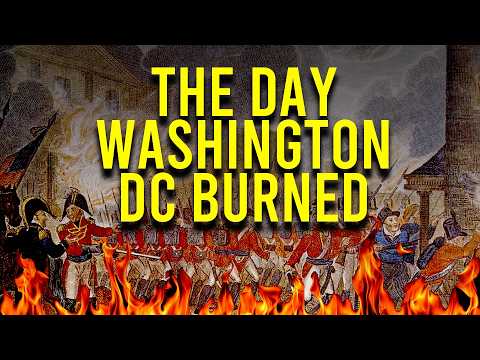
The building was interrupted by war. The film covers the War of 1812, and the day British troops set fire to the White House — August 24, and the burning that forced the young republic to rebuild its capital from the ashes. The Capitol, too, was left in ruins, and the documentary follows the rebuilding: the White House restored, the Capitol raised again, and the city remade. The burning is presented as a turning point — the moment the capital proved it could be destroyed and still stand.
The later chapters follow the capital through the Civil War and beyond. Washington during the Civil War was a city under threat, a capital of the Union ringed by war, and the film’s further reading reaches into that history: the battles, the burials at Arlington, and the emancipation that remade the nation. The Emancipation Proclamation and the Thirteenth Amendment, the assassination of Abraham Lincoln at Ford’s Theatre, the Smithsonian Institution — the film’s account moves through the institutions and the tragedies that made the capital what it is, and ends with the city as it stands now: the seat of power, built on bargains, burned in war, and rebuilt, again and again.
What the Film Explores
The film explores the founding first: the bargains and crises that decided where the capital would be. The Treaty of Paris, the Mutiny of 1783, the Compromise of 1790 and the Dinner Table Bargain — the documentary presents these as the founding acts of the city, the negotiations that turned an idea into a place. The capital, the film argues, was never a natural city. It was a political creation, and its history is the history of the politics that made it.
A second thread follows the building, and the film is at its most concrete here. Pierre L’Enfant’s plan, the construction of the White House and the Capitol, the dome finished in 1868 — the documentary shows a city being made, stone by stone, over decades. It also shows who made it: the African Americans whose presence shaped the White House from the 1790s to the 1900s, and whose story is part of the capital’s history. The building of Washington, the film suggests, was never only an architectural project. It was a human one.
A third thread follows the destruction and the rebuilding. The War of 1812 brought British troops to the capital, and the burning of the White House on August 24 forced the young republic to rebuild. The Capitol was left in ruins, and the documentary follows the restoration of both buildings as a story of resilience — a capital that could be burned and still stand, a nation that could lose its seat of government and build it again.
Running through the film is the Civil War and its aftermath, and the institutions that grew out of it. Washington during the Civil War, the burials at Arlington, the Emancipation Proclamation and the Thirteenth Amendment, the assassination of Lincoln, the Smithsonian Institution — the documentary presents these as the chapters that turned a capital into a seat of power. The city that emerged from the war was not the city that had been built before it, and the film’s argument is that Washington’s power was forged in those crises as much as in its founding.
Key Themes & Topics Examined
- The Treaty of Paris and the founding bargains
- The Mutiny of 1783 — America’s only successful insurrection
- The Compromise of 1790 and the Dinner Table Bargain
- Pierre L’Enfant and the plan for the capital
- The White House and the Capitol — the dome finished in 1868
- The War of 1812 and the burning of the White House
- Washington during the Civil War, and the burials at Arlington
- Emancipation, Lincoln’s assassination, and the Smithsonian
Production & Background
The film is a Geographics production, from the channel’s series of place-based histories, published twice a week. Geographics is the sister channel of Biographics, and its films follow the same essay style: a single place, traced from its origins to the present, with the sources and further reading laid out for the viewer.
The documentary’s own further reading reaches across the capital’s history: the Treaty of Paris, the Mutiny of 1783, the Compromise of 1790, the writings of Jefferson and L’Enfant, the history of the White House and the Capitol, the Civil War in Washington, Arlington Cemetery, and the assassination of Abraham Lincoln. The film is structured as a single journey through that history, from the founding bargains to the seat of power as it stands today.
Recommended Companion Viewing
Explore authoritative investigative documentaries on related historical events and investigative subjects.

Mao's China: Against the World
How Mandela Changed South Africa | From Prison To President
Countdown to War: 1930s Europe in Colour
Frequently Asked Questions
What is the film about?
The history of Washington DC — how the capital of the United States was planned, built, burned and rebuilt, and how it became the seat of American power.
Who designed the capital?
Pierre L’Enfant, whose plan laid out the city. The film also follows the construction of the White House and the Capitol, whose dome was finished in 1868.
Was the White House really burned?
Yes — during the War of 1812, British troops set fire to the White House, and the Capitol was left in ruins. The film follows the rebuilding of both.
What role did the Civil War play?
Washington during the Civil War was a capital under threat, ringed by war. The film covers the battles, the burials at Arlington, emancipation, and Lincoln’s assassination.
What is the Dinner Table Bargain?
The Compromise of 1790, which set the capital’s location in motion — one of the founding bargains the film traces, alongside the Treaty of Paris and the Mutiny of 1783.







