Is the sea swallowing up the land? | DW Documentary
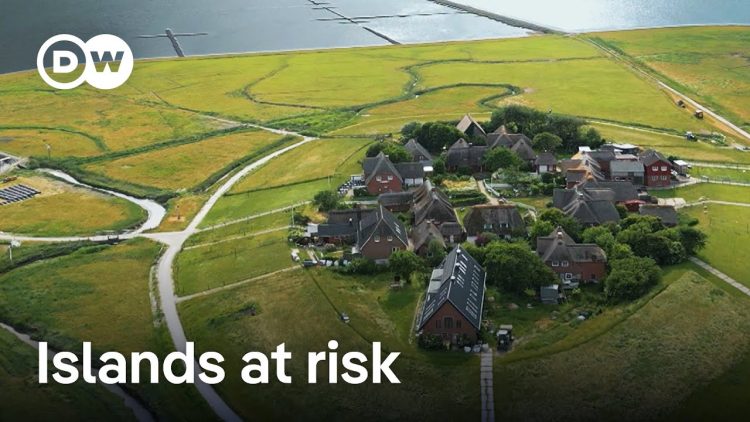
Flat landscapes, endless views, screeching seabirds in a blue sky. Cows graze on the salt marshes, and all around is the sea. That is life on Oland, a small island off the northern German coast, one of the ten Halligen in the Wadden Sea. It looks timeless, a snapshot of a way of life that has barely changed.
The Halligen are unlike ordinary islands. They are low-lying marsh islands, and most of them have no dikes. Their surfaces sit only a few decimetres above mean high water, so when a storm tide comes, the sea simply washes over the land. On some Halligen, that happens up to 22 times a year. The people who live there have always lived with the water, building their houses on raised earthen mounds and accepting the floods as part of the rhythm of life.
The film follows the residents of Oland as they deal with that change. It is a portrait of a small community — only around 300 people live across all ten Halligen — facing a problem far larger than itself. The camera watches the daily work of keeping a hallig viable: tending the salt marshes where the cows graze, maintaining the mounds and the few defences that exist, and deciding what to reinforce, what to raise and what to let go.
What gives the film its force is the contrast between the beauty of the place and the threat to it. The Wadden Sea is a UNESCO World Heritage site, a vast tidal landscape of mudflats, salt marshes and shallow water that is one of the most important habitats for migratory birds in the world. The Halligen sit inside it as small green islands in a grey-blue sea, and the film captures that beauty fully: the light, the birds, the open horizon. Then the water comes in, and the same landscape turns hostile, covering the pastures and lapping at the doorsteps. The film does not need to argue that this matters.
For the people of Oland, it is the question that decides their future, and the same question is being asked, in different forms, by coastal communities all over the world, as Displaced on Java – A village battling rising sea levels shows on the other side of the planet.
What the Film Explores
The film explores what it means to live on land that the sea can take. The Halligen have no dikes, so there is no line between the island and the ocean. The residents’ answer has always been to live with the water rather than against it: houses on mounds, land that floods and drains, a life organised around the tides. The film shows how that arrangement works day to day, and how rising seas are testing it. The floods are not a new event.
It also explores the work of adaptation. Making a hallig crisis-proof is not a single project but a hundred small ones: raising a house, strengthening a mound, protecting a freshwater supply, keeping the salt marshes healthy so they can keep growing upward with the sediment the tides bring. The film shows that adaptation is not only engineering. It is also a decision about what a community is willing to pay, and for how long, to stay where it is. The residents are not waiting for rescue.
A third strand is the natural world of the Wadden Sea itself. The salt marshes are not empty land waiting to be used. They are habitat for seabirds and migratory birds, and a nursery for the fish and shellfish of the North Sea. The cows that graze them are part of that system, keeping the marshes open and varied. The film shows how the human life of the hallig and the natural life of the marsh depend on each other, and how a rising sea threatens both at once.
Key Themes
- Living with the sea: the Halligen have no dikes, so their residents have always lived with floods rather than behind walls, building on raised mounds and accepting the tides.
- A rising threat: sea level rise is making storm floods higher and more frequent, and the margin for living with them is narrowing year by year.
- Small community, large problem: around 300 people live across the ten Halligen, facing a global process with local resources and local decisions.
- Practical adaptation: raising houses, strengthening mounds and caring for the salt marshes are the concrete steps that keep a hallig viable.
- A World Heritage landscape: the Wadden Sea is a tidal wilderness of mudflats and marshes, vital for migratory birds and inseparable from the life of the islands.
- When the pasture floods: the cows that graze the salt marshes are part of the ecosystem, and flooding that stops the grazing changes the marsh itself.
Production and Background
The film is a DW Documentary production, part of the German broadcaster’s long-running strand of films about the environment, science and daily life around the world.
The Halligen have been inhabited for centuries, and their story is one of the oldest in the Wadden Sea. Once there were hundreds of these small marsh islands; most have been lost to the sea over the centuries, and only ten remain. That history hangs over the film: Oland has survived this long because its people learned to live with the water, and the question the film asks is whether that old bargain can survive a sea that is now rising faster than the land can grow. The film does not answer that question.
Recommended Companion Viewing
Explore authoritative investigative documentaries on related historical events and investigative subjects.

Rivers Under Pressure: From Drought and Competing Agendas
The Global North taken to court - Who pays for the climate catastrophe?
Cargo sailboats: A sea change for shipping?
How heatwaves impact our lives
Frequently Asked Questions
What is a hallig? A hallig is a small, low-lying marsh island in the North Frisian Wadden Sea off Germany’s North Sea coast. There are only ten left. Most have no dikes, so storm tides wash over the land, and houses are built on raised earthen mounds.
Where is Oland? Oland is one of the ten Halligen, in the Wadden Sea off the coast of Schleswig-Holstein in northern Germany, in the UNESCO World Heritage Wadden Sea.
How often do the Halligen flood? Some Halligen are inundated up to 22 times a year, and their surfaces sit only a few decimetres above mean high water, so even ordinary high tides can cover the marshes.
Is the sea really swallowing the land? Sea levels are rising, and the land on the Halligen is growing upward through sedimentation more slowly than the water is rising, so the floods are getting higher and more frequent, and the risk to homes and pastures is growing.
More to watch
- Displaced on Java – A village battling rising sea levels
- Backbreaking Work: Deep-Sea Fishing in the Arctic Ocean
- How Far Should (Climate) Activists and Protesters Go?
- World’s Most Destructive Wildfires | How Mega-Fires Become Uncontrollable